Projects
PIURN projects led by the University of the South Pacific:
Principal Investigator: Dr. Ali Mohammadi
PacDigiTwin is a Pacific-led initiative to co-design and pilot a modular Digital Twin (DT) platform for enhancing the resilience, efficiency, and sustainability of microgrids in small island communities. Focusing on the hybrid solar-diesel-hydrogen microgrid at USP’s campus in Tarawa (Kiribati), the project will integrate ruggedised local edge computing with a cloud-based analytics server hosted at USP Suva. Artificial intelligence (AI) will drive predictive maintenance, optimal energy scheduling, and real-time fault detection, even in low-connectivity environments. The platform is designed to operate under the technical and environmental constraints of the Pacific, where intermittent internet, high diesel dependence, and fragmented energy systems pose significant challenges. The DT platform will combine real-time data acquisition, AI-based control, and local participatory design to deliver actionable insights for energy operators.Green hydrogen, produced via solar-powered electrolysis, will be used as a storable, clean energy vector integrated into the system. This reduces reliance on imported diesel fuel, improves microgrid autonomy, and enables emission-free backup power. The project will validate the integration of hydrogen generation, injection, and control within the DT framework, supporting both climate adaptation and energy innovation.
Duration: 2026-2027
Funding: AUD$35,000.00
Partners: The University of the South Pacific Dr. Janine Simi, Solomon Islands National University Rev. Dr. Ben Wate and Charles Darwin University Prof. Maurizio Cirrincione
Principal Investigator: Dr. Sarina Theys
This interdisciplinary project addresses an urgent and globally unique challenge: the threat of sea-level rise to the identities of Pacific islanders and communities. It introduces the concept of ontological security which entails the security of the subjective sense of self, that is, one’s identity as a person or as a community. So far, no systematic and detailed study has investigated how identities are threatened by sea-level rise, the implications for the actors and communities involved, and the consequences for climate change policies (Theys 2024). This project addresses these knowledge gaps through new research on the identities of Solomon Islanders and Ni-Vanuatu; how these identities have been threatened by sea-level rise; how Solomon Islanders and Ni-Vanuatu react to, and cope with, these threats; and why and how national and regional policy makers should incorporate identity in their climate change policies. We propose an integrative framework to understand and explain the process of ontological (in)security in the context of sea-level rise (Theys n.d.). This approach provides a holistic understanding of how identities are experienced and enacted by individuals and communities. The project aligns with UN SDG13 and SDG17. The research findings will be of interest to Pacific Island states, Pacific islanders, their communities and humankind worldwide as sea-level rise is set to affect millions of people across the globe.
Duration: 2026-2027
Funding: AUD$12,000.00
Partners: National University of Vanuatu Mr. Robson Tigona, Solomon Islands National University Dr. Morgan Wairiu & Dr. Mary Tahu Paia
Principal Investigator: Dr. Naohiro Nakamura
Aligned with Sustainable Development Goal 5 (Gender Equality) and one of the PIURN Research Themes “Social Development, Gender Equality & Education”, this project aims to capture the experiences of gender-based violence (GBV) survivors, assess the effectiveness of GBV related support services, and seek means to enhance the awareness of gender equality to eradicate GBV in Papua New Guinea, Samoa, and Fiji. As widely noted, Pacific Island countries (PICs) observe a substantial number of GBV cases and the three case study countries are no exception. The literature on GBV has identified several challenges to eradicate GBV in the context of PICs, including strong patriarchal ideologies, Christian teachings, weak state capacities, and geographical isolations. Even though non-governmental organizations that support GBV survivors have been active to some extent, they are still struggling to enhance the awareness of gender equality among the public. GBV-related laws in the case study countries often contradict traditional cultural values and community governance systems, which often makes the law less effective in protecting GBV survivors. Using a mixed methods approach of both quantitative and qualitative analysis the research team attempts to capture the first-hand experiences of GBV survivors, examine the effectiveness of GBV support services and policies, and, working together with service providers, determine the means to enhance their effectiveness, The ultimate goal of the project is to provide evidence-based research that can be used to strengthen and improve the way in which women/survivors can be protected from domestic violence with some policy recommendations.
Duration: 2025-2027
Funding: AUD$34,360.00
Partners: The University of Papua New Guinea Mrs. Minetta Kakarere, National University of Samoa Rev. Dr. Sam Amosa & Dr. Masami Tsujita
Principal Investigator: Associate Prof. Gilianne Brodie & Associate Prof. Sandra Tarte
Diversity, Equity, and Inclusion (DEI) have become critical priorities in universities globally, including in the Pacific region. While many Pacific universities are developing DEI policies, their implementation and perceived effectiveness vary widely. Governance structures, how universities are led and managed, play a pivotal role in shaping these outcomes. However, little comparative research exists on how different governance models influence DEI policy implementation and impact across Pacific higher education institutions. The scope of the current project focuses only on the Gender, Equity and Inclusion (GEI) components of the wider DEI agenda. Within academic institutions, committees or working groups are commonly established to provide advice or response on issues relating to Gender, Equity and Inclusion (GEI) policy, gender parity initiatives, equal opportunity programs or gender and related issues within the University community. These groups also promote collective approaches to training or awareness raising activities that address common challenges for woman and girls. Limited data exists on the effectiveness of such committees in achieving their goals, terms of reference or in meeting University community expectations. Our project aims to address this gap by examining governance frameworks and their influence on GEI implementation and policy across, and within, five different Pacific universities (NUS, UNC, SINU, FNU & USP). The project aligns directly with the UN Sustainable Development Goals (SDGs)—specifically: SDG 4: Quality Education, SDG 5: Gender Equality, SDG 10: Reduced Inequalities, SDG 16: Peace, Justice and Strong Institutions and SDG 17: Partnerships for the Goals. This alignment will ensure that the research contributes not only to academic understanding, and the strengthening of inclusive governance mechanisms that enhance equity and institutional effectiveness, but also to practical, policy-relevant outcomes for regional development.
Duration: 2025-2027
Funding: AUD$34,900.00
Partners: The University of the South Pacific Dr Jashwini Nararayan, Fiji National University Assistant Prof. Dr. Zakia Ali-Chand, University of New Caledonia Prof. Stephanie Geneix-Rabault, National University of Samoa Prof. Patila Amosa, Solomon Islands National University Associate Prof. Eric Katovai, Australian National University Dr. Sara Beavis and Western Sydney University Prof. Kate Huppartz
Principal Investigator: Dr. Victor Alasa
This regional study investigates the adjustment needs and culturally rooted coping strategies of parents raising children with special needs in Fiji and the Solomon Islands.
Duration: 2025-2026
Funding: AUD$12,000.00
Partners: The University of the South Pacific Dr Janine Simi and Solomon Islands National University Dr. Ben Wate
Principal Investigator: Associate Professor Mansour Assaf- STEMP
A wearable wireless assistive technology allows persons with disabilities to operate home appliances without using a physical handheld remote control. The proposed technology enables people with severe disabilities to interact with and control their environments simply by moving their tongues. The remote control tongue-based assistive system could help individuals with severe disabilities lead more independent lives. The proposed project, once completed, would have social and cultural impact in the South Pacific islands. Project outcomes will be presented in regional and international symposiums and published in ranked proceedings and journals.
Duration: 2024-2025
Funding: FJD$20,000.00
Partners: National University of Samoa Professor Ioana Chan Mou
Principal Investigator: Dr Philip Obaigwa Sagero – SAGEONS
This study aims to investigate the climate resilience of livestock production in the South Pacific region using Fiji as the case study. Livestock is critical to food security in the South Pacific region. The goal of livestock production is to enhance the health and wellbeing of the population of a nation through food security, healthy food, and as a source of income. There is a need for a more climate-resilient livestock sector; these require consulted efforts between farmers, government agencies, commercial industries, and researchers. Understanding the impacts of climate change, adaptation, and mitigation strategies on livestock production is key to a resilient livestock sector. This study provides insight into trends in livestock production in Fiji, the negative impact of climate change and weather extremes, Institutional framework for climate change support, and provide recommendations for climate-resilient livestock production.
Duration: 2024-2025
Funding: FJD$19,962.00
Partners: Fiji National University Associate Professor Royford Magiri
Principal Investigator: Dr Levente Orban – SOLASS
This proposal outlines an investigation at the intersection of mental health, biosensor data acquisition, and machine learning models using Post-Traumatic Stress Disorder (PTSD) as the model condition. The theoretical approach of this project is embedded in the Research Domain Criteria (RDoC) initiative by the National Institute of Mental Health (NIMH, USA). We apply this framework to estimating gradation from a healthy psychological state to anxious and depressive states caused by PTSD through the acquisition of time-series biosensor data and the application of dimensionality reduction and machine learning algorithms. The aim of the proposed study is to use wearable noninvasive biosensors and machine learning algorithms to estimate mental states that result in PTSD. The potential impact of this research is to deploy affordable and accurate technological solutions that can penetrate remote villages and regions without clinical expertise.
Duration: 2024-2025
Funding: FJD$20,000.00
Partners: Fiji National University; University of Ottawa
Principal Investigator: Dr Dr Vikas Gupta – SBM
This research project investigates the sustainable practices of hotels and resorts in Fiji, with a multifaceted approach aimed at understanding and evaluating their impact on local communities, the environment, and guests from various nationalities. A significant part of the research is dedicated to investigating how these hotels and resorts engage with local communities. This involves evaluating the effectiveness of their initiatives in preserving cultural heritage, providing economic benefits to local people, and enhancing the overall tourism experience. The study focuses on identifying the green attributes of hotels that influence guests’ decisions to participate in eco-friendly practices, examining the factors that motivate or discourage their engagement in sustainable tourism.
Duration: 2024-2025
Funding: FJD$15,990.76
Partners: Fiji National University Dr Sunil Kumar Sinha
Principal Investigator: Dr. Francis Mani
This study aims to investigate air pollution in major cities in the Pacific like Suva, Lautoka and Noumea using continuous PM2.5 samplers and also bio-indicators such as lichens. Suva city is one of the fastest growing cities in the South Pacific region that has seen recent increase in traffic on the road. This study aims to provide insights into the impact of traffic and industrialization on air pollution.
Apart from traffic and industrial pollution in Lautoka and Noumea there are other anthropogenic activities like sugar cane burning in Lautoka and nickel mining in Noumea that could seriously impact PM2.5 concentration and composition that could have adverse effect on human health. A detailed elemental analysis would be performed on PM2.5 aerosols using the state of the art ICP-OES instrument at the University of New Caledonia to undertake source apportionment studies.
Duration: 3 years from October 2017 to October 2020.
Funding: FJD$59,500.00.
Partners: University of New Caledonia, University of Massachusetts.
Principal Investigator: Dr. Morgan Wairiu
The proposed research study will focus on evaluating the effectiveness of adapting strategies used to address climate change impact on atoll islands and other selected Solomon Islands communities as prioritized in the Solomon Islands National Adaption Programme of Action 2008 and align with lessons learned and experiences from implementation of the NAPAs in the four other Pacific LDCs. A detail and comprehensive evaluation will be conducted on the specific key priority areas in Solomon Islands NAPAs. This includes:
- Managing the impact of and enhancing resilience to climate change and sea level rise on agriculture and food security, water supply and sanitation, human settlements, human health and education, awareness and information and,
- Climate change adaption on low –lying and artificially built up islands in Malaita and Temotu provinces.
Duration: October 2017- October 2018
Funding: FJD$46,150.00.
Partner: Solomon Islands National University.
Principal Investigator: Dr. Krishna Kotra
Project overview: The proposal is to investigate the quality of drinking water resources in Efate and outer six islands which were badly hit by natural calamities. This is supported by the concerns voiced by the communities about the decline in the water quality of these resources and their reports of changes in turbidity, salinity, fecal contamination, gastrointestinal aliments, etc. This was also in line with the longstanding thought to framework national standards by Govt. in Vanuatu.
The proposal besides investigating the water quality is also aimed in providing training for various Govt. department staff, NGOs, USP staff/students besides community leaders. Survey, sampling, analytical interpretation, policy making sessions along with field work would be the part of the research study.
Duration: 2 years
Funding: FJD$43,311.00.
Partners: The Papua New Guinea University of Technology, Government of Vanuatu, University of Auckland, University of New South Wales.
Principal Investigator: Dr. Sonny Lameta
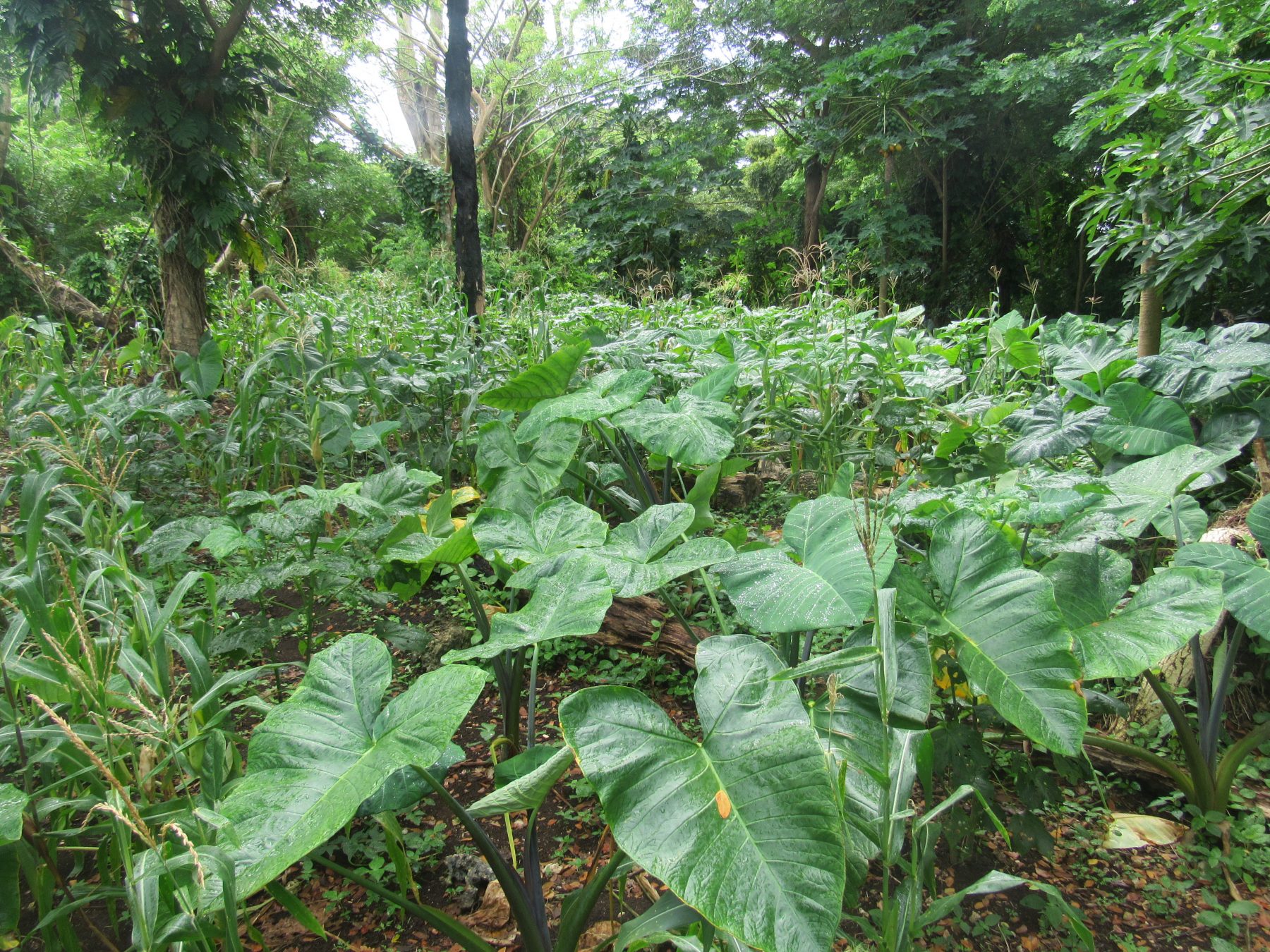
This proposed project concerns the interactions and mutual influences of food production from traditional Melanesian and Polynesian family gardens and quality diets, and thus community health in Pacific societies. This food production, and ultimately food security, is intimately tied up with village lifestyles and the traditional cultures and knowledge systems of our rural people, but is being jeopardized by a range of factors such as population growth, urbanization, alienation of land for other purposes and ignorance on the part of the policy making political and business elite, with a focus almost exclusively on the market. The availability of quality land per head of rural population and soil fertility are declining and this has dietary consequences leading to such issues as non-communicable diseases and poor health outcomes. There is a necessity to document and quantify these issues to inform policy makers and activists, as well as educate farmers and service providers.
Duration: 2 years
Funding: FJD$48,000.00
Partners: Solomon Islands National University, University of Goroka, University of New Caledonia, Caledonian Agronomical Institute.
PIURN projects led by the University of New Caledonia:
Principal Investigator: Prof. Viriginie de Barnier
The aim of the GEST project is to create entertaining CSR training tools for the tourism sector. The Ethic’hôtel game, a serious CSR training game for the hotel and catering industry, is the starting point for this research. The aim is to validate this tool and develop new games for more general training in sustainable tourism and sustainable management. The project is based on action research, involving players in the construction of these tools, through training. In addition to these workshops, individual and group interviews will identify divergences and convergences in terms of context, uses, representations, obstacles and levers. At the end of the project, not only will tourism players have been trained in sustainable tourism, but teaching tools will have been designed to accompany this training.
Duration: 2025-2027
Funding: AUD$33,300.00
Partners: University of French Polynesia Dr. Mickael Dupré and National University of Vanuatu Ms. Anne-Sophie Vivier
Principal Investigator: Prof. Christophe Morhange-Anker
Beginning about 3000 years ago, the Lapita culture developed a variety of adaptations to its coastal and fluvial environments, managing soils, water and vegetation in gardens. It did so using diverse strategies including seasonal resource restrictions, complex exchange networks, and a chiefly political economy focused on the redistribution and sharing of resources (Sand, 2010). Georchaeological proxies offer new perspectives on the emergence of these adaptive systems in a complex coastal environment. They can provide a long-term analysis of when particular practices emerged and how they changed through time in relation to relative sea-level fluctuation. This research will bring together a variety of data, including biostratigraphy and radiocarbon dates, surveys of palaeo-agricultural systems, plant microfossils, and palaeo-landscape reconstructions. These different sources of information reflect systems of environmental management, learning and adaptation to environmental changes that remain vital for today and the future. Understanding resource use during the Lapita period is hampered due largely to a paucity of data related to plant remains. Geoarchaeological proxies such as relative-sea level sedimentary markers, sedimentary budget evolution and plant microfossils from the Lapita period have received relatively little attention compared to ceramic analyses. Our objective is to analyze these proxies, e.g., plant microfossils (pollen, phytoliths and starch) and charcoal particles from the Lapita site in the Kone River mouth sector in New Caledonia. It is the first time that such an approach will be used to investigate the context, occupation, and structure of a Lapita site at various temporal and spatial timescales.
Duration: 2025-2027
Funding: AUD$15,000.00
Partners: The University of the South Pacific Dr. Frank Thomas, Australasin National University Dr. Janelle Stevenson, University Toulouse 3/CRBE Dr. David Kaniewski, IANCP, IRD, CNRS/THEMA and CEREGE
Principal Investigator: Dr. Elatiana Razafimandimbimanana
Tok Stori is a collaborative, youth-led participatory filmmaking and research initiative that empowers Pacific youth to explore, document, and share their intergenerational legacies and future aspirations through creative media. Grounded in Youth Participatory Action Research (YPAR), the project places young people at the center of storytelling, enabling them to create culturally grounded narratives that reflect the languages, identities, arts, and knowledge systems they inherit and reimagine. The initiative directly supports PIURN’s mission to cultivate the next generation of Pacific leaders and researchers through participatory, community-embedded methods. Through a regional series of creative media workshops and multilingual dialogues, Tok Stori fosters skills in participatory filmmaking, critical media literacy, and Indigenous storytelling practices. These workshops, hosted across Micronesia, Melanesia, and Polynesia, will culminate in the production of a youth-created documentary film and an accompanying educational toolkit for use in Pacific schools and universities. These outputs not only strengthen university-community partnerships but also contribute to Pacific-centered scholarship and culturally responsive pedagogy aligned with the education, research, and technology pillar of the 2050 Strategy for the Blue Pacific Continent. In partnership with the University of New Caledonia, National University of Vanuatu, University of French Polynesia, and the Northern Marianas College, and with the support of Film Fiji, the Guam Commission on Decolonization, and the Hawai‘i Filmmakers Collective, the project builds a dynamic network of youth storytellers and educators across the region. The digital repository, public screenings, and film festival submissions will further amplify youth voices, foster regional solidarity, and engage broader audiences—including policymakers, educators, and civil society—in critical conversations around sustainability, identity, and future-making. Ultimately, Tok Stori is more than a film project; it is a vehicle for cultural continuity, youth empowerment, and regional resilience. By enabling Pacific youth to become creators of knowledge and cultural memory, it transforms the landscape of representation and research in the Pacific—supporting a legacy of decolonial, community-driven, and future-oriented leadership.
Duration: 2025-2027
Funding: AUD$35,000.00
Partners: University of French Polynesia Dr. Goenda Turiano-Reea and National University of Vanuatu Dr Leslie Vandeputte
Principal Investigator: Prof. Nicolas Lebouvier
Aromatic plants as sandalwood species play an important role in the natural products industries and in the traditional uses of many communities in Oceania. By studying variations in the chemical composition of plants, it is possible to identify chemotypes with high added values. The selection, conservation and propagation of plants with specific chemotypes using in vitro methods is a relevant approach to ensuring their conservation and sustainable use. By promoting local ecofriendly economic development, this project aims to share knowledge and practice between researchers and students of the PIURN and generate added value for communities based on the responsible use of local biodiversity.
Duration: 2026-2027
Funding: AUD$33,820.00
Partners: University of New Caledonia Dr. Thomas Crossay & Dr Cynthia Sinyeue, The Papua New Guinea University of Technology Dr. David Timi, Dr. Jason Wau & Dr. Cossey Yosi and the Botanical Conservatory of New Caledonia
Principal Investigator: Prof. Virginie de Barnier
RISE-Pac explores the intersection of sustainable tourism and community well-being across four Pacific Island territories: New Caledonia, Vanuatu, and Fiji. Through an innovative, mixed-method approach, the project seeks to generate data-driven, locally relevant insights that inform inclusive, equitable, and sustainable tourism strategies. By involving communities in both the research and the policy formulation, it aims to create a long-term observatory that will guide public and private decision-making, strengthen social cohesion, and empower island populations in a post-crisis context.
Duration: 2025-2027
Funding: AUD$34,600.00
Partners: The University of the South Pacific Prof. Gurmeet Singh and National University of Vanuatu Ms. Anne-Sophie Vivier
Principal Investigator: Pr Virginie de Barnier – LARJE
This project aims to enforce closer collaborations between French-speaking countries (in particular New Caledonia) and English-speaking ones; furthermore, the project is based on an interdisciplinary approach, involving marketing, economics, law and cultural anthropology. Furthermore, it intends to adopt a collaborative methodology, through the involvement of local partners and stakeholders and through a bottom-up dynamic.
Duration: 2024-2025
Funding: 1,500,000 XPF – 30,600 FJD
Partners: The University of South Pacific, National University of Vanuatu, University of French Polynesia, James Cook University
Principal Investigator: Dr Pascal Dumas
Continuing the acquisition of the necessary databases for the analysis of contemporary morpho-sedimentary dynamics at multiple scales on low-lying coasts marked by issues), in order to “feed” and sustain the observatory.
– Providing an interpretation of the multi-scale observations made using available environmental data through a dialogue between the scientific knowledge of the project team and the local knowledge of the populations in the studied areas.
– Involving managers, decision-makers, customary leaders, and local communities, with a particular focus on school education, in a dual approach: a) contributing to the databases to be established through the participatory shoreline measurement network, and b) engaging in shared discussions about potential solutions to be implemented based on the measurements taken, with a strong emphasis on the involvement of local knowledge.
Duration: 2024-2025
Funding: 3,200,000 XPF – 69,990 FJD
Partners: National University of Vanuatu, Mayotte University, Cote d’Opale University, Nantes University
Principal Investigator: Pr Patrick Roger – LARJE
The aim is to develop a network of researchers in the South Pacific to undertake projects aimed ultimately at improving the economic and financial education of young people (mainly secondary school students) in the region. The initial stage consists of collecting data on the financial literacy of young people in Oceania (New Caledonia, New Zealand and Fiji), their cognitive abilities and their socio-demographic characteristics. The second objective is to analyze the data collected in order to achieve the objectives described above. The results of this project will also be used to study and understand the socio-economic, educational success and gender inequalities that can exist from an early age, as well as to provide input for public educational policies in the economic and financial fields.
Duration: 2024-2025
Funding: 960,000 XPF – 19,600 FJD
Partners: The University of South Pacific, National University of Samoa, Fiji National University
Principal Investigator: Dr Virginie Soula – TROCA
Publish a bilingual (English/French) anthology of contemporary literary texts (2000-2023). The aim is to offer a selection of emblematic texts from English- and French-language literature in the Pacific (Australia, Fiji, Hawaii, French Polynesia, New Caledonia, New Zealand, Vanuatu), exploring the major issues facing the Pacific today.
Duration: 2024-2025
Funding: 1,500,000 XPF – 30,600 FJD
Partners: The University of South Pacific Dr Lorenz Gonschor, Dr Sudesh Mishra ; The University of French Polynesia: Dr Titaua Porcher, Pr Sylvie Largeaud-Ortega, Dr Andréas Pfersmann and University of Auckland
Principal Investigator: Dr Olivier GALY
The Knowledge, Indigenous Practices and Resilience in the Pacific Islands (SPAR-Pacific) project focuses specifically on family perceptions and practices among New Caledonian and Vanuatu students and their families in 2022 in the Post COVID-19 Pandemic context. The interdisciplinary project worked on:
- Measuring the existence and activation of traditional knowledge and practices among New Caledonian and Ni-Vanuatu students.
- Appreciating the associated perceptions and intangible aspects of youth
- Understanding the modes of development, expression, and transmission after the COVID-19 pandemic in relation to the socio-economic and natural environment of young people
Duration: 2020-2022
Funding: 12 570 euros
Partners: National University of Vanuatu
Principal Investigator : Dr Nicolas LEBOUVIER
The genus Xanthostemon belongs to the Myrtaceae family which contains about fifty plant species distributed across Papua New Guinea, Australia, Indonesia and New Caledonia. The leaves of Xanthostemon produce essential oils, that can be utilized as a renewable chemical resource. An Australian study showed that some Australian species have unique compositions with aromatic molecules and β-triketones, while others have a more traditional composition of terpenoids. β-triketones having methyl substituents on a 6-membered ring with an acyl side chain and possess important antimicrobial and insecticidal activities. To date, there is no data on the molecular composition of species from New Caledonia and Papua New Guinea. Leaves of various Xanthostemon will be collected and extracted using steam distillation techniques. The objectives studied are:
– Compare the composition of essential oils and identify chemotaxonomix markers in species of the genus Xanthostemon from Australia, Papua New Guinea and New Caledonia
– Evaluate the antimicrobial and insecticidal activity of essential oils and isolated β-triketones and understand their evolutionary role in the biotic interactions between plants, insects ans associated microorganisms
– Modify the molecular structures of β-triketones in order to study their broader structure-activity relationships.
Duration: 2020-2022
Funding: 25 140 euros
Partners: PNG Unitech, New Caledonia Pasteur Institute, James Cook University
Principal Investigator: Prof. Jean-Marie Fotsing
AASIP 2 followed the successful FALAH (Family Farming, Lifestyle, and Health) project, that was awarded 1.3 million euros from H2020-MSCA. This project was designed to support the implementation of the FALAH project, especially regarding research on the different sites (Fiji, Solomon Islands, Vanuatu and New Caledonia)
Duration: 2019-2021
Funding: 20 385 euros
Partners: The University of the South Pacific, Solomon Islands National University, New Caledonia Institute of Agronomy (IAC), French Research Institute for Development (IRD), Vanuatu Agricultural Research and Technical Centre (VARTC)
Principal Investigator: Dr. Valérie Burtet-Sarramegna
Hyperaccumulators are unusual plants that accumulate particular metals or metalloids in their living tissues to levels that may be hundreds or thousands of times greater than is normal for most plants. Most reported hyperaccumulator plants are for nickel and occur on ultramafic soils that are naturally enriched in nickel, cobalt and manganese. However, many hyper-accumulators have not been studied or described yet. The goal of the present project is to study and compare hyper-accumulating species from Australia, Fiji and New-Caledonia using multidisciplinary approaches in order to gain a global knowledge of the uptake, biotransformation and distribution of Ni in hyperaccumulators; a step which is critical in understanding the processes of metal acquisition and metal tolerance.
Duration: 2019-2021
Funding: 16 760 euros
Partners: The University of the South Pacific, University of Queensland, New Caledonia Institute of Agronomy (IAC), IRD (Research Institute for Development).
Principal Investigator: Prof. Frédérique FLOUVAT
DURVIS follows-up the SOSPADIS project with the aim to study informal settlements in Vanuatu and in the Solomon Islands and collected date on urban dynamics in the two countries.
Duration: 2019-2021
Funding: 16 760 euros
Partners: The National University of Vanuatu, Solomon Islands National University, French Research Institute for Development (IRD)
Principal Investigator: Dr. Valérie Burtet-Sarramegna
Hyperaccumulators are unusual plants that accumulate particular metals or metalloids in their living tissues to levels that may be hundreds or thousands of times greater than is normal for most plants. Most reported hyperaccumulator plants are for nickel and occur on ultramafic soils that are naturally enriched in nickel, cobalt and manganese. However, many hyper-accumulators have not been studied or described yet, especially in Papua New-Guinea. The goal of the present project is to study and compare hyper-accumulating species from Australia, PNG and New-Caledonia using multidisciplinary approaches in order to gain a global knowledge of the uptake, biotransformation and distribution of Ni in hyperaccumulators; a step which is critical in understanding the processes of metal acquisition and metal tolerance.
Duration: 2 years (End 2017 – March 2019)
Funding: FJD$30,600.00
Partners: University of Queensland, University of Papua New Guinea, Caledonian Agronomical Institute, IRD (Research Institute for Development).
Principal Investigator: Dr. Mathieu Bunel
The project aims to build a platform to access to individuals database for and by the Pacific in order to promote access to data, structure their use and disseminate the results to the scientific community. The first objective of the project is to constitute or participate with the SPC to the constitution of a numerical portal enabling access under conditions to a catalogue, as wide as possible to inquiries data on the Pacific islands region. The second objective is to structure a researcher’s community in order to promote the use and add value to studies using this local data. The creation of a dedicated website, the constitution of proper work studies and the organization of a one-day symposium aims to set out the studies realized thanks to the portal data or statistical methods or econometrical designed for data coming from small islands countries are contemplated.
Duration: 18 months
Funding: FJD$30,600.00
Partner: The University of the South Pacific
Principal Investigator: Prof. Géraldine Giraudeau
Creation of a visible bilingual academic network in order to mutualize current researches, creation of pedagogical useful supports to disseminate the results of these researches to students, universities staff, professionals, and to the public.
Duration: 18 months
Funding: FJD$41,000.00
Partners: The University of the South Pacific, Université du Mans.
Principal Investigator: Prof. Jean-Marie Fotsing
Interrogate and analyze agricultural practices in rural and urban area, evaluate the place and the importance of cultivated products in the alimentation to apprehend the alimentation consequences on population health and in priority on producers and their family. Focus on environmental, spatial and society’s basis, the project takes place on different fields chosen in the three partners territories. Looking for the link between demographic growth and the evolution of agricultural areas, evaluate and quantity cultivation plots and the species cultivated. Implementation of the inquiries questionnaire in order to product original data on the informal agricultural production portion in alimentary security.
Duration: 18 months (June 2018 – November 2019)
Funding: FJD$41,000.00
Partners: Vanuatu Ministry for Education and Training, Vanuatu Agricultural Research and Technical Centre, Divine Word University, Papua New Guinea University of Technology, IRD (Research Institute for Development).
Principal Investigator: Prof. Yves Letourneur
This project will response to essential concerns about contamination levels, and the diversity of species studied will enable also to evaluate the way the pollutants integrate their selves within food chain ending to commercial interest species.
Duration: 18 months (June 2018 – November 2019)
Funding: FJD$20,500.00
Partners: The University of the South Pacific
Principal Investigator: Prof. Frédérique FLOUVAT
Develop a new approach to model informal settlements growth in Fiji Islands and Vanuatu, and understand the socio‐spatial organization within the settlements. This approach intend to provide tangible information and scenarios that can help engineers and urban planners to plan informal settlements water related services and to test rehabilitation strategies.
Duration: 14 months (June 2018 – September 2019)
Funding: FJD$24,855.00
Partners: The University of the South Pacific, Massey University, Ecosophy (New-Caledonia).
PIURN Project led by the Divine Word University
Principal Investigator: Mr. Ben Ninkama
This research explores how gender roles and responsibilities are understood and practiced within contemporary families in Papua New Guinea (PNG) and the Solomon Islands. It examines how traditional cultural values, biblical teachings, and constitutional principles shape gender dynamics in modern family life. The study aims to identify areas of harmony or conflict between these three influences, and how they impact gender equality, family stability, and social development. The findings will contribute to gender-sensitive policy recommendations and awareness initiatives that respect cultural identity while promoting justice and equality.
Duration: 2025-2027
Funding: AUD$13,320.00
Partners: Solomon Islands National University Dr. Hugo Bugoro
Principal Investigator: Dr. Gigil Marme
Characterising the concept of resilience from a Melanesian standpoint is lacking in health systems research methodologies. Our team’s project aims to apply Melanesian theories and methodologies towards co-designing a health resilience framework by integrating indigenous and cultural knowledge into health policy and planning for Papua New Guinea (PNG) and the Solomon Islands (SI). By employing a 4-phase, participatory action research, co-designed research with participants comprising the community and health workers of Mingende Rural Hospital, PNG and Good Samaritan Hospital, SI. We propose bringing to light the relational values of relationship, exchange, reconciliation, participation, contribution, and sharing, which are integral to Melanesia, within the approach of the methodologies of Kapori storytelling in Mingende and Tok Stori in Good Samaritan Hospital to co-construct a resilience framework to be embedded into health policy and planning for the respective countries
Duration: 2025-2027
Funding: AUD$35,000.00
Partners: Solomon Islands National University Mrs. Emelda Ariku and the University of Queensland Dr. Irene Semos
PIURN Project led by the Pacific Adventist University
Principal Investigator: Mrs. Annlya Elumba
Widowhood in Papua New Guinea (PNG) and the Solomon Islands is frequently accompanied by multilayered forms of marginalization, including economic deprivation, social isolation, limited inheritance rights, and cultural stigmatization. Widows are often excluded from property ownership, community leadership, and legal protection due to the dominance of patriarchal customary systems and weak enforcement of statutory rights. These challenges are compounded by harmful traditional practices, such as sorcery accusations and ritual exclusion, which further erode widows’ agency and well-being. Despite the presence of religious institutions and women’s networks, the specific needs of widows remain largely unaddressed in both community practice and development policy. This study adopts a participatory action research (PAR) framework to investigate and address the lived experiences of widows in selected rural and urban communities in PNG and the Solomon Islands. Through community-based data collection methods—such as focus group discussions and participatory mapping—the research aims to co-produce knowledge with widows and other key stakeholders. It further seeks to co-design and implements targeted interventions, including livelihood training, psychosocial support initiatives, and community awareness activities. By foregrounding the voices and leadership of widows, the research seeks to transform their position from marginalization to participation. The overarching goal of the project is to develop a culturally responsive, sustainable model for widow empowerment through inclusive community engagement. Expected outcomes include enhanced economic resilience, improved psychosocial well-being, and greater visibility of widows in local governance and advocacy platforms. The findings will inform policy recommendations and provide a replicable framework for addressing widowhood in other Pacific contexts, contributing to broader efforts to advance gender equity, social justice, and community resilience.
Duration: 2025-2027
Funding: AUD$17,000.00
Partners: Solomon Islands National University Associate Prof. Eric Katovai